Table of contents
- Letter from the Board
- Modelica Association
- Conferences and user meetings
- Vendor news
- News from libraries
- Education news
Letter from the Board
Dear Modelica, FMI, SSP, DCP, eFMI interested,
As an eventful year draws to a close, this Advent newsletter is the perfect opportunity to look back at our flagship event:
Past and Future Events for Our Community
We are delighted to have received so much positive feedback about the 16th International Modelica & FMI Conference in Lucerne. The new format — with dedicated tracks for FMI and related standards as well as for industrial user presentations — proved very successful. Both tracks were well attended, giving the conference a noticeably different character: many participants told us that the event felt more methodologically oriented and encouraged them to engage in exchanges with attendees from different application domains who face similar challenges. This kind of dialogue is exactly what we aim for as a truly multi-domain community.
Our participants also showed remarkable enthusiasm and stamina. Discussions remained animated throughout the entire dinner boat cruise, the packed program triggered the occasional sprint from one lecture hall to the next, and yet most attendees stayed until the very end, with conversations continuing past the official program.
Selecting the awards was no easy task for the conference board: many excellent papers were submitted, and eight free libraries entered the competition. Please have a look at the corresponding Modelica news item. Many existing free libraries also received significant updates. The official conference proceedings have been published as Linköping Electronic Conference Proceedings (as well as the proceedings of the Asian Modelica Conference 2024). Many presentations can be found online via the conference app. Selected recodings of the live presentations are currently being processed and will be published soon.
Once again, I would like to thank our two outstanding keynote speakers Mishra Siddhartha and Johan R Åkesson as well as all participants in the panel discussion. We are very grateful to have received support from our sponsors. Most of the credit, however, goes to our local organizer, Prof. Ulf Christian Müller, Ivo Steiner, and the entire team from HSLU. Organizing a conference of this scale is a tremendous effort, and the Modelica Association is truly grateful to have been able to hold its conference in such a marvellous location.
Of course, there is always room for improvement, and we will carry these lessons forward to our upcoming events:
- September 21-22, 2026: Asian Modelica & FMI Conference in Hangzhou, China
- October 12-14, 2026: American Modelica & FMI Conference in Atlanta, USA
- September 20-22, 2027: 17th International Modelica & FMI Conference in Prague, Czech Republic
The respective websites will go live very soon. Beyond these major conferences, please also note the many smaller workshops and events. I would particularly like to highlight for 2026:
- February 2-4: OpenModelica/MODProd Workshop in Linköping, Sweden
- May 5, 2026: Modelica in Process Engineering – Community Meetup 2026, Cologne, Germany
- June 15, 2026: EOOLT Workshop on Equation-Based Languages in Bielefeld, Germany
- September 22-23, 2026: ThermoSim 2026 in Aachen, Germany
…and this list is certainly incomplete. I also encourage you to watch for events from our partner organizations, such as ASAM. For me, it is truly wonderful to see so many activities that keep our community vibrant and thriving.
On Modelica & FMI in China (II)
As noted in the previous newsletter, the user base for Modelica standards in China is very large and is supported by local tools and dedicated teaching material. However, the Modelica Association itself has so far been underrepresented there, which means that many Modelica- and FMI-related efforts within China remain somewhat fragmented. We shall also ensure that progress achieved in Asia flows back into the international standards so that the entire world can benefit.
To address this, the Modelica Association is proud to have gained Dr. Rui Gao (CTO of Nanjing Yuansi SimTek) as our new Secretary of the Board. He is currently focusing on the upcoming Asian Modelica Conference at Beihang University in Hangzhou. Dr. Gao has assembled a large organizing committee that includes tool vendors, industry representatives, academia, and members from Japan and Korea. His work will immediately help strengthen the Asian branch of our community.
Dr. Gao succeeds Dr. Michael Tiller, who served on the board for more than 20 years. The Modelica Association is deeply grateful for his long service and pleased that he will continue as a regular member and in the board of NAMUG.
New Deputy Leader for eFMI
In addition to the board, there are also changes regarding the organization of the eFMI Project. We are happy to announce that Daeoh Kang (CEO of iVH Co., Ltd.) is the new deputy project leader of the Modelica Association Project eFMI. We gladly welcome Daeoh and like to thank Hubertus Tummescheit, our former deputy project leader, for his contributions and wish him all the best with his new affiliations at The REUSE Company.
Daeoh is well familiar with eFMI and Modelica, promoting its application in industry, like he showed at the eFMI tutorial at the last International Modelica & FMI Conference, 2025. iVH offers eFMI training for Modelica users in Korea and has been the conference organizer of the last Asian Modelica Conference, 2024. In the spirit of the Modelica Association to open itself for Asia, Daeoh is a perfect match to represent and promote eFMI in the eastern hemisphere.
With Daeoh becoming new deputy project leader, iVH is also stepping up from Advisory Board membership to become a Steering Committee member.
Teaching Initiative
In Lucerne, I briefly announced that the Modelica Association intends to launch a Teaching Initiative. The response was immediate and very encouraging. Clément Coïc has taken the lead and has already started publishing an insightful series of introductory articles on social media. If you are not active on social media, do not worry since the articles will also be made available in a more traditional format.
Alberto Leva raised a very valuable point by preparing content specifically for the control-engineering community, and several experienced lecturers have pointed us to their existing teaching material. The next steps for the Modelica Association will therefore be to make this material more easily accessible and to provide guidance in a form that allows interested learners (of any age and background) to quickly find the resources most relevant to them.
The teaching initiative is still in its early stages. One of its goals is also to give teachers and professors a stronger voice within our association. If you have good material you would like to share or ideas of your own, please feel free to contact me or Clément.
I wish you all a Merry Christmas, a joyful holiday season, and a great start to 2026
Dirk Zimmer on December 04, 2025
Chair of the Modelica Association
This article is provided by Dirk Zimmer (Modelica Association)
Modelica Association
News from the FMI Project
16th International Modelica and FMI Conference Sept 8-10 2025 in Lucerne, Switzerland
This conference was the first Modelica Association Conference that had the “FMI” also in its title - and it was a great success! We had FMI- as well as industrial user track over the whole conference. This attracted about 40% more participants than at the last conference - especially from industry and attendants with main interest in FMI. Key take-aways:
- FMI is used by almost everyone who visited the conference. Both in “standard use cases” - and in in many new cool applications and domains!
- FMI 3.0 is getting the “new normal” - besides the widespread usage of FMI 2.0, in the majority of FMI-related presentation FMI 3.0 with its new features is used - and with growing tool support this accelerates fastly currently
- The Layered Standard concept hit a very important need to innovate fast without making the core standards too complicated.
- The FMI Layered Standard for Network Communication (FMI-LS-BUS) ist very fastly adopted (see below)
- At an FMI Advisory Committee Meeting the day after the conference with more than 50 participants, the FMI Project exchanged feedback, requirements and new ideas with many industry partners.
All FMI-related papers, tutorials and industrial user presentations on the Literature page of the FMI website.
FMI Design meeting in Berlin
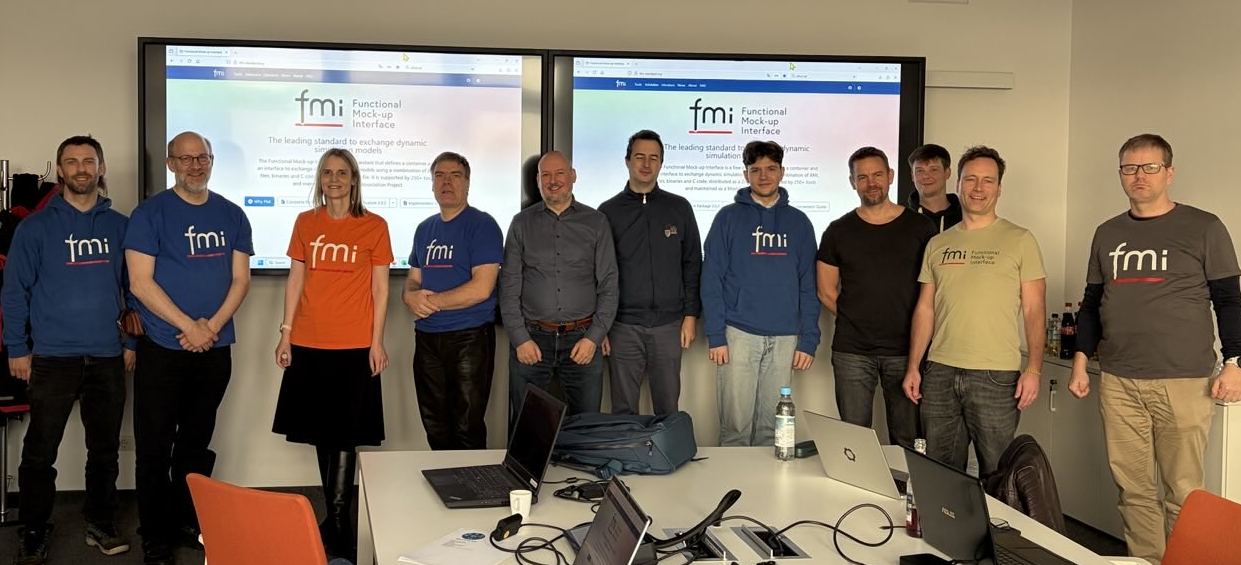
The FMI Project had a very productive FMI Design Meeting Berlin on Dec 3/4 2025. Good progress was made on
- extending the FMI Layered Standard for Network Communication (FMI-LS-BUS) from CAN (v1.0) to FlexRay, Ethernet and LIN, which will then cover the main automotive busses, and is open for extensions to other busses in many other fields such as automatisation, aerospace etc.
- the coming FMI Layered Standard for Structured Data (FMI-LS-STRUCT), for which we plan to enter beta stage soon.
- the coming FMI Layered Standard for reference (FMI-LS-REF), for which we will have an alpha version soon.
- enhancements of the FMI Standard w.r.t. to efficiency for large-scale, communication intensive simulations.
Many thanks to Dassault Systèmes and the local host Torsten Sommer for their hospitality!
The FMI Layered Standard for Network Communication (FMI-LS-BUS) - growing tool support and extension for Flexray, Ethernet, LIN

The year 2025 marks a significant advancement for the FMI Layered Standard for Network Communication (FMI-LS-BUS). With the release of version 1.0, a key milestone has been reached, laying the foundation for a standardized and flexible representation of networks in FMUs. In general the FMI-LS-BUS approach is suitable not only for the automotive industry but also for all domains, such as industrial automation, aerospace, and energy.
Version 1.0.0 offers, for the first time, full support for Physical Signal Abstraction and extends Network Abstraction to include the CAN, CAN FD, and CAN XL bus systems. This enables developers to model complex communication structures realistically and interoperably. This step is an important contribution to the unification of simulation standards and facilitates collaboration between different tools and platforms.
But that’s not all: Throughout the year, further releases were published, continuously expanding the functionality of the FMI-LS-BUS. Version 1.1.0-Beta.2 introduced support for FlexRay, an essential bus for safety-critical applications. Shortly thereafter, version 1.2.0-Alpha.2 followed, which for the first time provides Ethernet support for the FMI-LS-BUS. In parallel, work on draft version 1.3.0 was completed, integrating the LIN bus – an important step for covering low-speed communication in distributed systems.
These developments clearly demonstrate that the FMI-LS-BUS is well on its way to establishing itself as a cross-industry standard. It offers a scalable solution for the growing demands on modeling communication systems in a wide variety of application areas.
Other Resources for FMI
- Visit the FMI tools page listing 260 tools supporting FMI!
- Join the LinkedIn FMI community to get the latest news on FMI, FMI supporting tools and discussions within the user community.
- Report problems of the standard itself or suggestions for new features in form of issues or discussions on fmi-standard.org
This article is provided by Christian Bertsch, MAP FMI
Conferences and user meetings
Modelica in Process Engineering – Community Meetup 2026
In many fields, Modelica has become a proven and widely used modeling technology. For thermal and energy systems, it is already a major success. In process engineering, however, its use is still limited to isolated activities, despite strong technical foundations and no inherent barriers to broader adoption.
Over the years, several promising efforts appeared — academic prototypes, industrial pilots, small working groups. But they rarely connected with each other, and many initiatives faded before a real community could form. At the same time, established tools such as Aspen and gPROMS continue to dominate the PSE landscape.
At TLK Energy, we work with these challenges directly. With the Process Systems Library (PSL), we see how much potential Modelica has in this domain. But we are also convinced that progress will only happen if those working on similar ideas finally find each other. A stronger network is needed — not only for discussion, but for concrete collaborations and projects.
To help spark this connection, we are initiating the Modelica in Process Engineering – Community Meetup 2026.
Date: May 5, 2026
Location: ANNO 1858, Cologne, Germany
Format:
- Short impulse talks and application reports
- Open discussion rounds and exchange of experiences
- Show & Tell contributions from participants
- Informal networking from 17:00
- Joint dinner in the Brauerei Malzmühle from 18:00
The event website will go online soon. To receive an update once registration opens, please sign up for the TLK Energy newsletter.
We look forward to connecting the community and meeting many of you in Cologne.
This article is provided by TLK Energy (TLK Energy)
EOOLT 2026: 10th International Workshop on Equation-Based Object-Oriented Modeling Languages and Tools
Hochschule Bielefeld, University of Applied Sciences, Bielefeld, Germany
June 15, 2026
First call for papers
Many engineers rely heavily on model-based design and control of complex cyber-physical systems. Of paramount importance is the ability to capture all central aspects of such systems in the models, including the physical behavior of the system components and the architecture description of its software and hardware. This calls for a special class of modelling languages: hybrid modeling languages based on equations that support both continuous-time and event-based aspects. Modelica, SysML, VHDL-AMS and Simulink/Simscape are prominent examples. Using such a language offers a number of advantages: models can be reused, integration can be tested in an early design phase, and simulation code can be generated for a number of different platforms.
The EOOLT workshop addresses the current state of the art of equation-based object-oriented (EOO) modeling languages and explores topics that aim to overcome limits of their expressiveness, correctness, and usefulness. Moreover, integration of and comparison with related approaches and languages, such as actor-oriented, synchronous, and domain specific languages, are of particular interest.
Contributions to this workshop focus on methodological aspects and describe new solutions for the design and use of equation-based languages. In addition to full contributions, shorter work-in-progress papers are welcome, offering an opportunity to discuss current approaches within the community.
Typical subjects of the EOOLT workshop range from language design via modeling aspects to simulation code:
- Design aspects of equation-based languages and their formal semantics
- Relation to other languages such as functional reactive programming (FRP) or synchronous languages
- Verification, type systems, and early static checking
- Discrete-event and hybrid system modeling
- Acausality / non-causality and its role in model reusability
- Multi-resolution / multi-scale modeling using EOO languages
- Model-driven development related to EOO languages
- Equation-based modeling in the frame of system engineering
- Reflection and meta-programming
- Environments for modeling, simulation and debugging
- Mathematical formalisms for simulation semantics
- Code generation for real-time systems, embedded system, multi-core platforms, and distributed systems
- Tools for analyzing or optimizing equation-based models
Important dates
- Paper submission deadline: March 27
- Author notification: April 27
- Camera-ready: May 22
- Workshop: June 15
Submission guidelines
Researchers and practitioners are invited to submit the following contributions:
- Full length research papers: up to 10 pages for consideration by the program committee. Papers are welcome that offer presentations and discussions of existing languages and tools, their capabilities and limitations; reports on practical experience; demonstrations of languages, tools, benchmarks, ideas, and concepts; positions related to relevant questions; and discussion topics.
- Work-in-progress papers: up to 4 pages for consideration by the program committee. Papers are welcome that offer presentations and discussions of work-in-progress and open problem statements that can be thoroughly discussed during the workshop. All submissions must describe original research work, not previously published or submitted for publication elsewhere. The program committee will evaluate the papers’ technical contributions, relevance, originality, correctness, and clarity.
All papers should be submitted using the EasyChair conference management system.
Links
- Webpage: https://eoolt.org/2026/
- Easychair: https://easychair.org/my2/conference?conf=eoolt2026
Committees
Steering committee
- David Broman KTH Royal Institute of Technology, Sweden
- Francesco Casella Politecnico di Milano, Italy
- Peter Fritzson Linköping University, Sweden
- Dirk Zimmer German Aerospace Center, Weßling, Germany
Organizing committee
- Bernhard Bachmann (General Chair) Hochschule Bielefeld, Germany
- Benoît Caillaud (Program Chair) INRIA Rennes, France
Venue
The conference will be held on June 15th 2026, at the Hochschule Bielefeld, University of Applied Sciences, Bielefeld, Germany
This article is provided by Benoît Caillaud, INRIA Rennes
eFMI® Tutorial 2025 Recordings and Slides Released
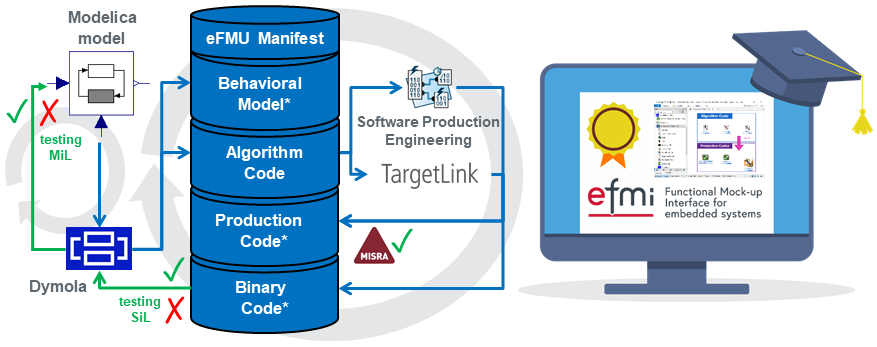
The recording and slides of the eFMI® Tutorial presented at the 16th International Modelica & FMI Conference (8th of September 2025) are now public available on YouTube (videos) and the eFMI website (slides & videos).
We had about 15 participants from 13 organizations and the feedback has been great! Close to all participants managed to follow the hands-on, for which we provided a portable Dymola & CATIA Software Production Engineering with all required tooling like compilers, libraries etc included. Many of the participants got really excited and used the unique opportunity provided by the conference to discuss the feasability of eFMI in their application domain.
We like to thank each participant for joining the tutorial and your kind feedback!
The tutorial demonstrates the current state-of-the-art of available eFMI tooling in five individual parts, including an eFMI overview, motivating example, hands-on, advanced examples and industry use-case. The respective YouTube recordings are:
- Part 1: eFMI® motivation and overview
- Part 2: Running use-case introduction
- Part 3: Hands-on in Dymola and Software Production Engineering
- Part 4: Advanced demonstrators
- Part 5 (industry case-study): eFMI based thermal management system (TMS) development for fuel cell electric vehicles (FCEV)
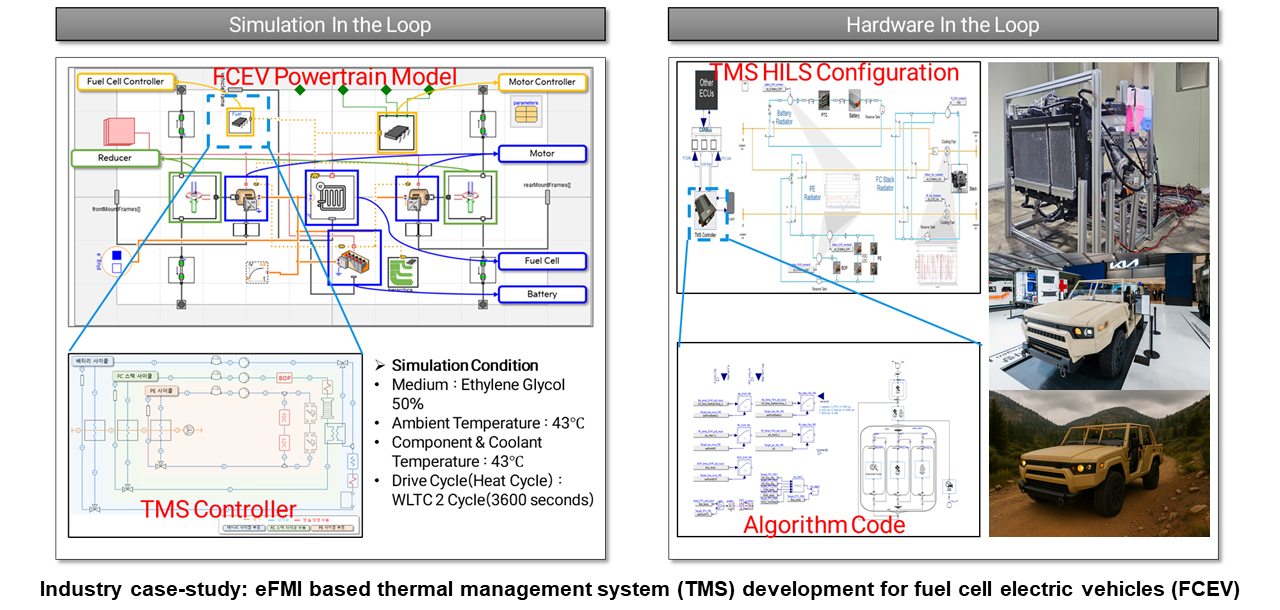
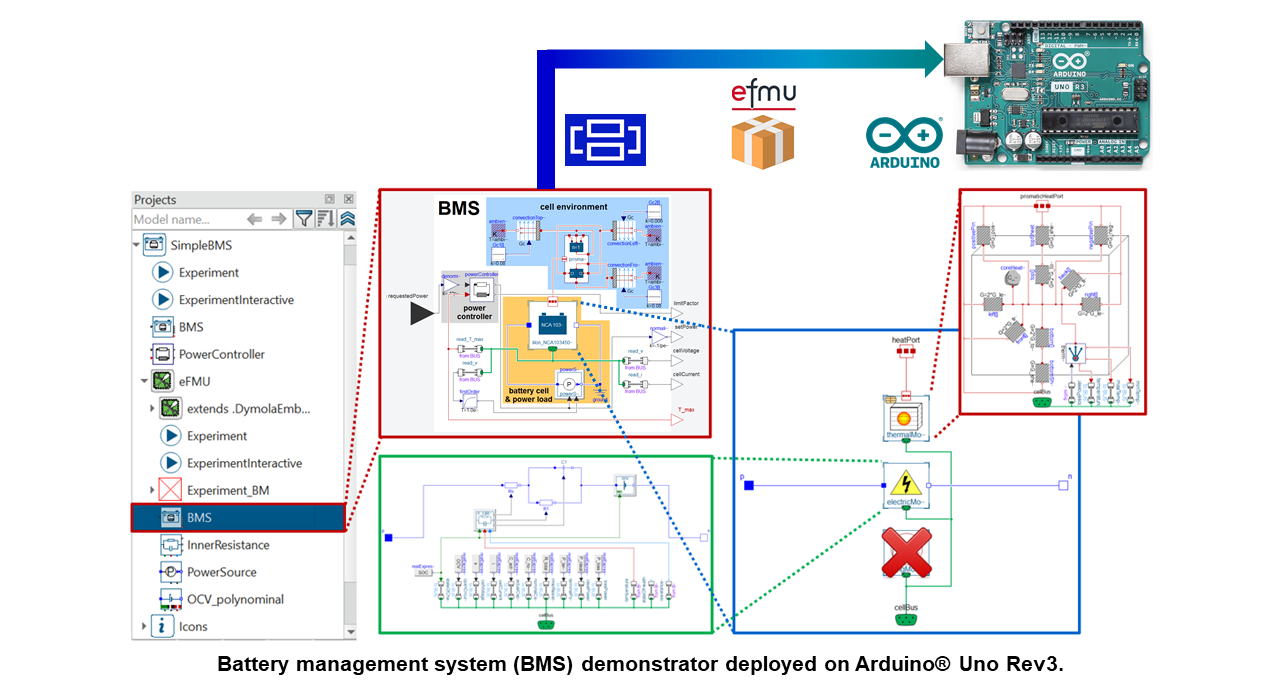
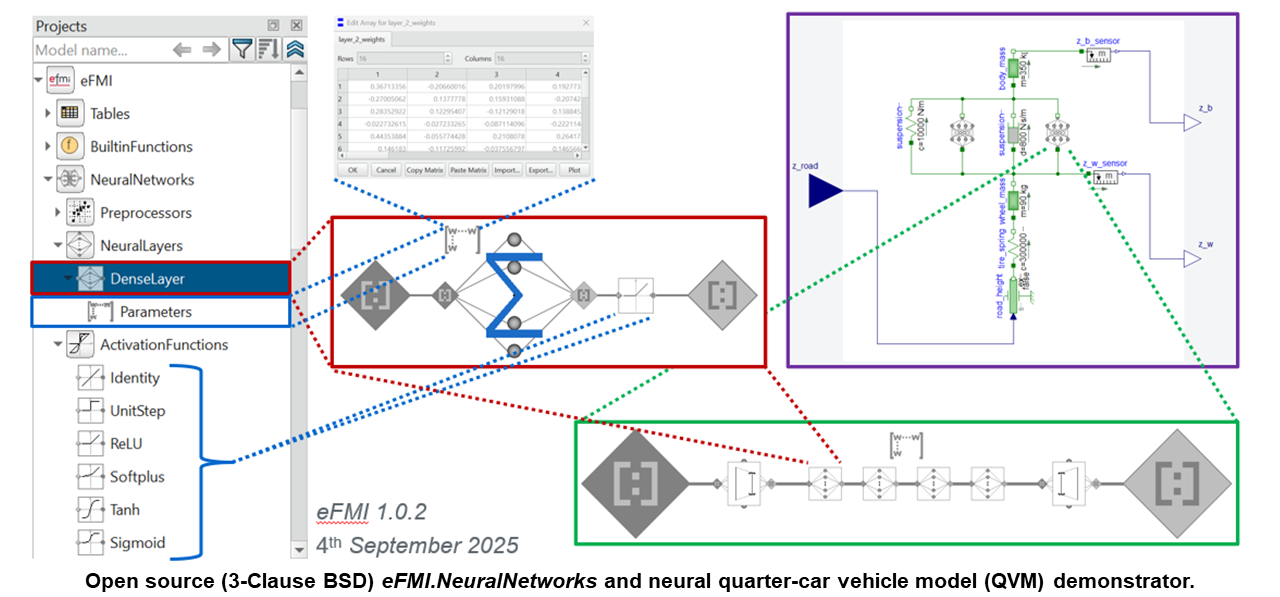
Highlights of the tutorial are Part 4, the advanced examples including the new eFMI.NeuralNetworks Modelica library and the battery management system (BMS) demonstrator presented at the DS booth (BMS technical report), and Part 5, the first application of eFMI in industrial production for the thermal management of the fuel cells of an electric vehicle by iVH (presentation slides). Both parts show the steady progress of eFMI tooling and how we can achieve high-hanging fruits with the tooling we already have right now.
If you have any general questions or feedback on what you think we need to improve or also cover in such tutorial, please contact us on our public mailing list, efmi-info@googlegroups.com (no Google account required) or write a private mail to Christoff.Buerger@3ds.com.
Your feedback is very welcome!
This article is provided by Christoff Bürger (Dassault Systèmes)
CFP OpenModelica/MODPROD Workshops 2026
Call for presentations/participation for the OpenModelica workshop and the MODPROD workshop on model-based cyber-physical product development. The OpenModelica workshop is concerned with tooling and applications of OpenModelica, whereas the MODPROD workshop covers general cyber-physical system modeling and system development using multiple tools and formalisms. Several tutorials will be given including topics such as Modelica, FMI, Modelica-in-Julia, etc.
The workshops are organized in cooperation with INCOSE Sweden and IEEE Computer Society Swedish Chapter.
Location: Linköping University, Linköping, Sweden See https://modprod.github.io for latest updates.
-
18th OpenModelica Annual Workshop, February 2, 2026
-
20th MODPROD Workshop on Model-Based Cyber-Physical Product Development, February 3-4, 2026
Theme for this year: The Game of Product Modeling
Deadline
Deadline for submissions of abstracts and/or draft presentations/papers: December 14, 2025
Acceptance Notification: December 19
For submission to MODPROD 2026, use https://easychair.org/conferences/?conf=modprod2026
For submission to OpenModelica 2026, use https://easychair.org/conferences/?conf=openmodelica2026
Keynote for OpenModelica2026 workshop:
Assoc. Prof. Rodrigo Castro, University of Buenos Aires, Argentina,
“EconoLab: Teaching Model-Based Economic Dynamics with Modelica in a Computer Science Course”
Keynotes for MODPROD2026 Workshop (preliminary):
- Prof. Benoit Combemale, INRIA.
“There Is Only One Time in Systems Engineering! Towards a Continuous (model-based) Engineering”
Benoit is research director of INRIA, full professor (University of Rennes, IRISA) with research in software engineering and model-driven engineering software engineering, (MDE), software language engineering (SLE) and software validation & verification (V&V), mostly in the context of smart cyber-physical systems and Internet of things.
- Prof. Ramin Karim, Luleå University of Technology.
Ramin is professor of industrial AI & eMaintenance and founder of a spin-off company from Luleå University of Technology, which develops analytics solutions based on industrial AI and eMaintenance.
- Dr. Björn Nagel, DLR/Linköping University.
“Collaborative Aircraft Design Engineering for Future Technologies”
Björn is the director of the Institute of System Architectures in Aeronautics at the German Aerospace Center (DLR). His research is focused on digital engineering methods including MBSE and MDO enabling large and heterogeneous teams to model and optimize aviation as a system-of-systems. Pathways to climate-compatible air transport, co-design for industrialization and military air systems are his major fields of research.
For more information, registration and previous workshops see www.openmodelica.org and www.modprod.se.
This article is provided by Peter Fritzson Open Source Modelica Consortium
American Modelica Conference 2026
Join the American Modelica & FMI Conference 2026, which will take place at the Georgia Institute of Technology in the Aerospace Systems Design Laboratory from October 12–14, 2026. It is organized by NAMUG, the North American Modelica Users’ Group, in cooperation with the Modelica Association.
About the Conference
As part of the conferences promoted by the Modelica Association, the American Modelica & FMI Conference 2026 is the main event in North America for users, library developers, tool vendors and language designers to share their knowledge and learn about the latest scientific and industrial progress related to Modelica, FMI, SSP, eFMI and DCP. The program will cover processes and tools for the modeling of complex physical and cyber-physical systems as applied to a wide range of research and industrial applications. For the 2026 conference, we will also include a new track on the structure and application of equation-oriented modeling languages other than Modelica into the program, since we see many similarities that will enrich a wider conversation centered on principles of equation-oriented modeling and encourage growth of our community.
In addition to paper presentations, the conference features several Modelica tutorials for beginners and advanced users, as well as industrial user presentations, vendor sessions, and an exhibition. We hope to build on the success of the previous 2024 American Modelica conference by providing an venue for stimulating conversations among attendees of many different backgrounds, ranging from those who are exploring and learning about the language for the first time to long-standing experts, with lively discussions in the breaks and an in-person conference dinner!
Call for papers, user presentations and tutorials
Please see the call for papers for details about paper submissions and industrial user presentations, and vendor presentations. Please look at the author instructions before submitting. The submission deadlines are as follows:
- May 1, 2026: Submission of full papers
- June 1, 2026: Submission of extended abstracts for presentation-only contributions, workshops, and tutorials
Further updates for information about the conference will be provided as the date for the conference gets closer.
Student Paper Competition
In building on the successes of the previous American Modelica conference, we are also happy to announce a Student Best Paper competition. Additional details are available in the call for papers.
Sponsorship opportunities
The American Modelica conference will be your opportunity to meet your customers again in a personal setting, at a great location.
For sponsorship opportunities, please send an email to: modelicaNA2026@groups.liu.se
Organization and Contact
The conference is organized by NAMUG in cooperation with the Modelica Association.
For general questions, please send an email to: modelicaNA2026@groups.liu.se
Conference Board
- Conference Co-Chair Dr. Michael Tiller, Juliahub
- Conference Co-Chair Dr. Hubertus Tummescheit, Modelon
- Program Chair Prof. Luigi Vanfretti, Rensselaer Polytechnic Insitute
- Program Chair Dr. Michael Wetter, Lawrence Berkeley National Laboratory
- Conference Excecutive Coordinator Dr. Christopher Laughman, Mitsubishi Electric Research Laboratories
- Behnam Afsharpoya, Dassault Systemes
This article is provided by Chris Laughman, North American Modelica Users Group)
Vendor news
Orthogonal Updates ODE Suite and Launches Transfer Platform
orthogonal supersystems GmbH has released major updates across its ODE engineering suite and launched a new independent platform, Transfer.
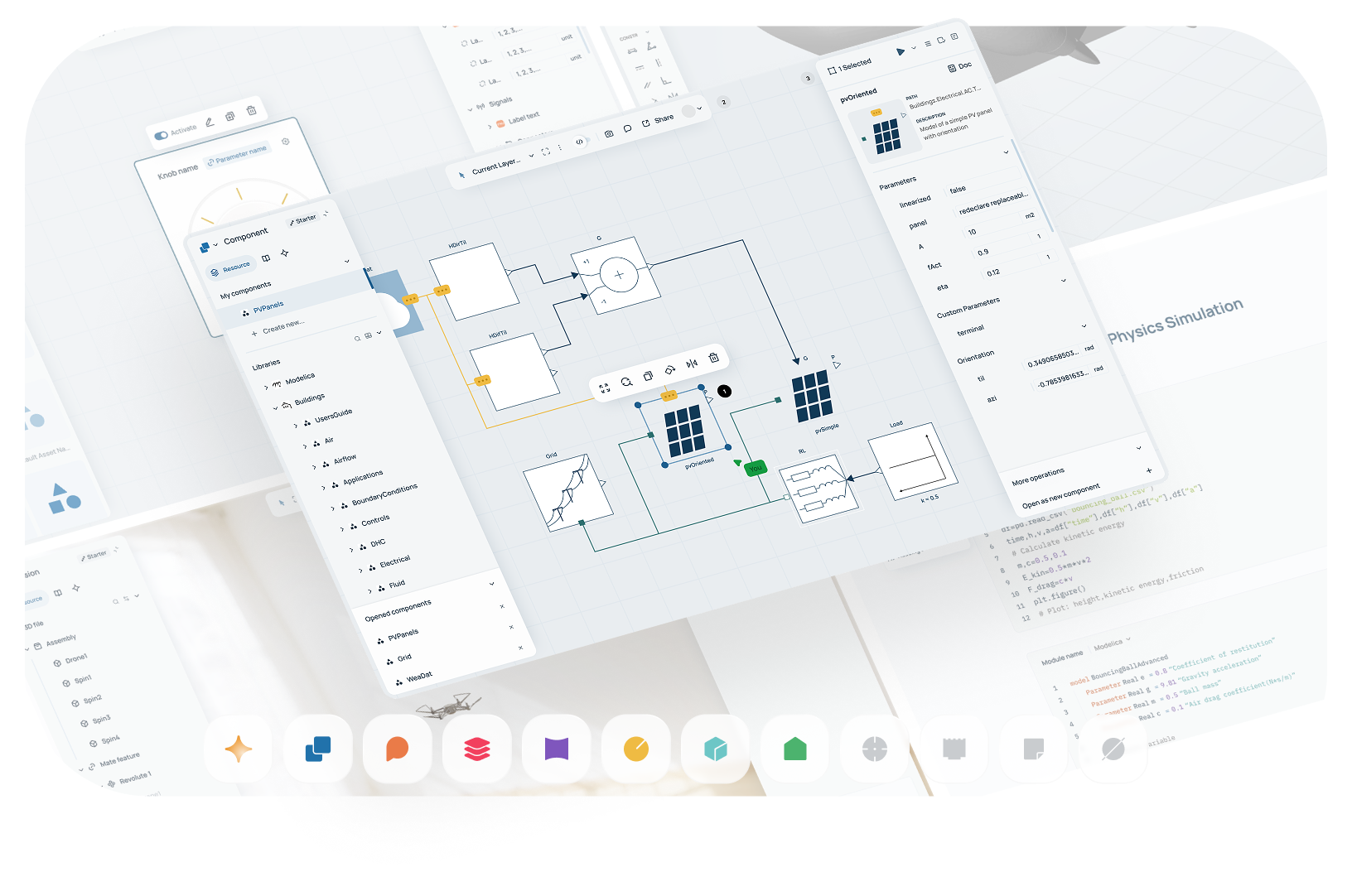
- ODE (Browser-based MBSE Suite):
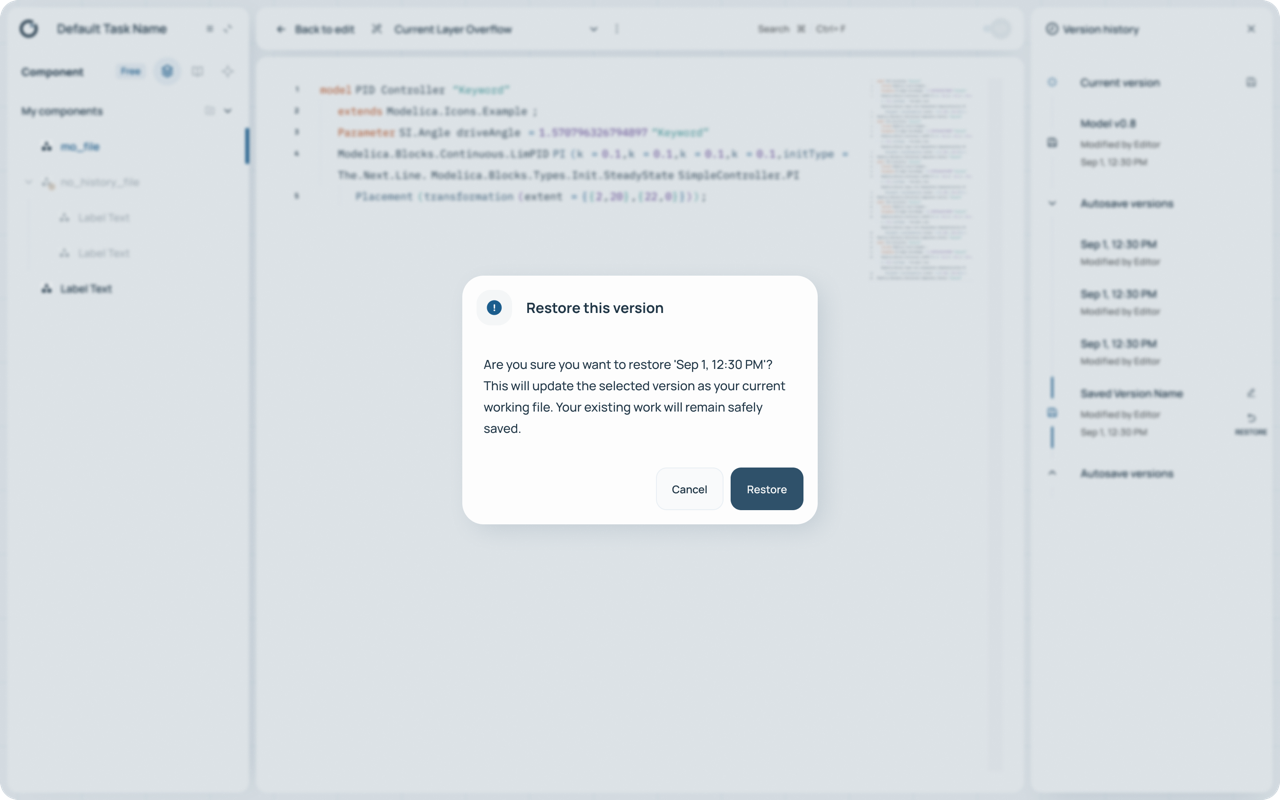
- Component (v1.0): This Modelica-powered cloud editor now features comprehensive Version Control (snapshots, history, and code comparison) and robust Modelica Package support (including .zip imports with resources). New capabilities also allow direct CSV/custom table imports for cloud-compatible data injection.
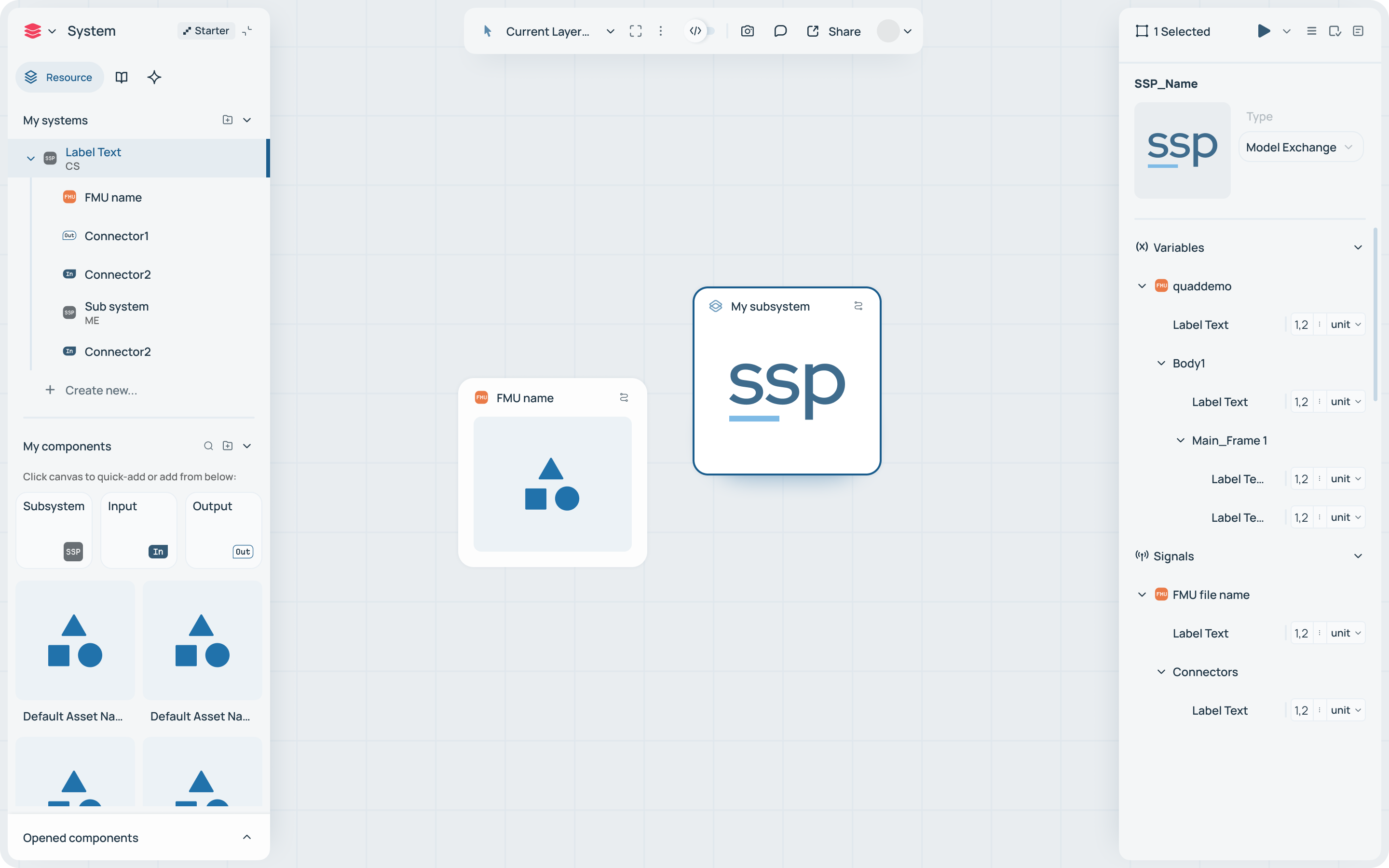
- System (v1.0): The System app now fully supports SSP (System Structure and Parameterization). A redesigned interface enables drag-and-drop FMU assembly and visual parameter management for complex architectures.
- Architecture (Beta): This tool bridges the gap between architectural design and behavioral simulation by synchronizing SysML models from SysOn directly into ODE Assets.
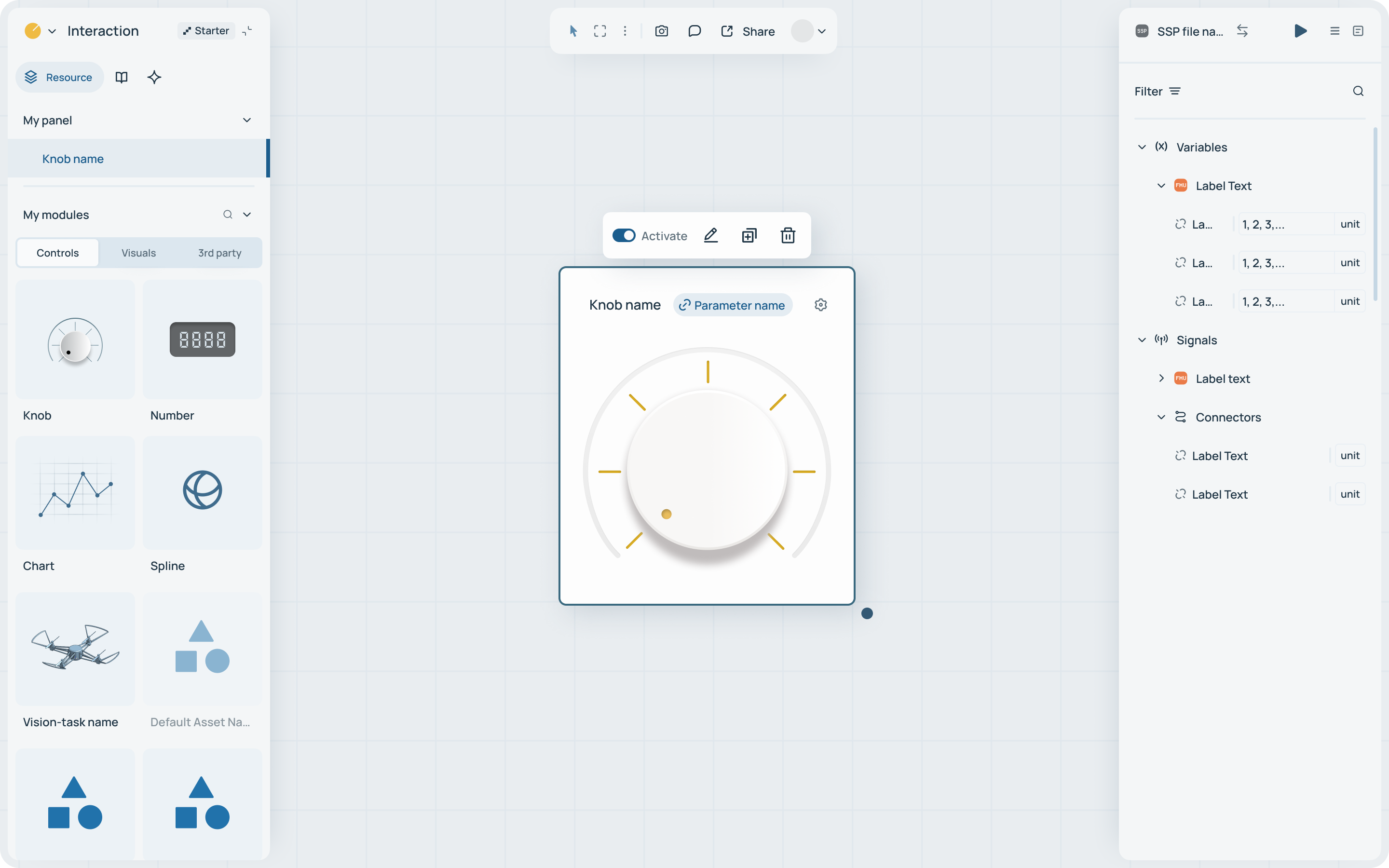
- Interaction (v1.0): A completely redesigned UX improves real-time simulation with better parameter controls, richer visualization components, and full support for FMU and SSP models.
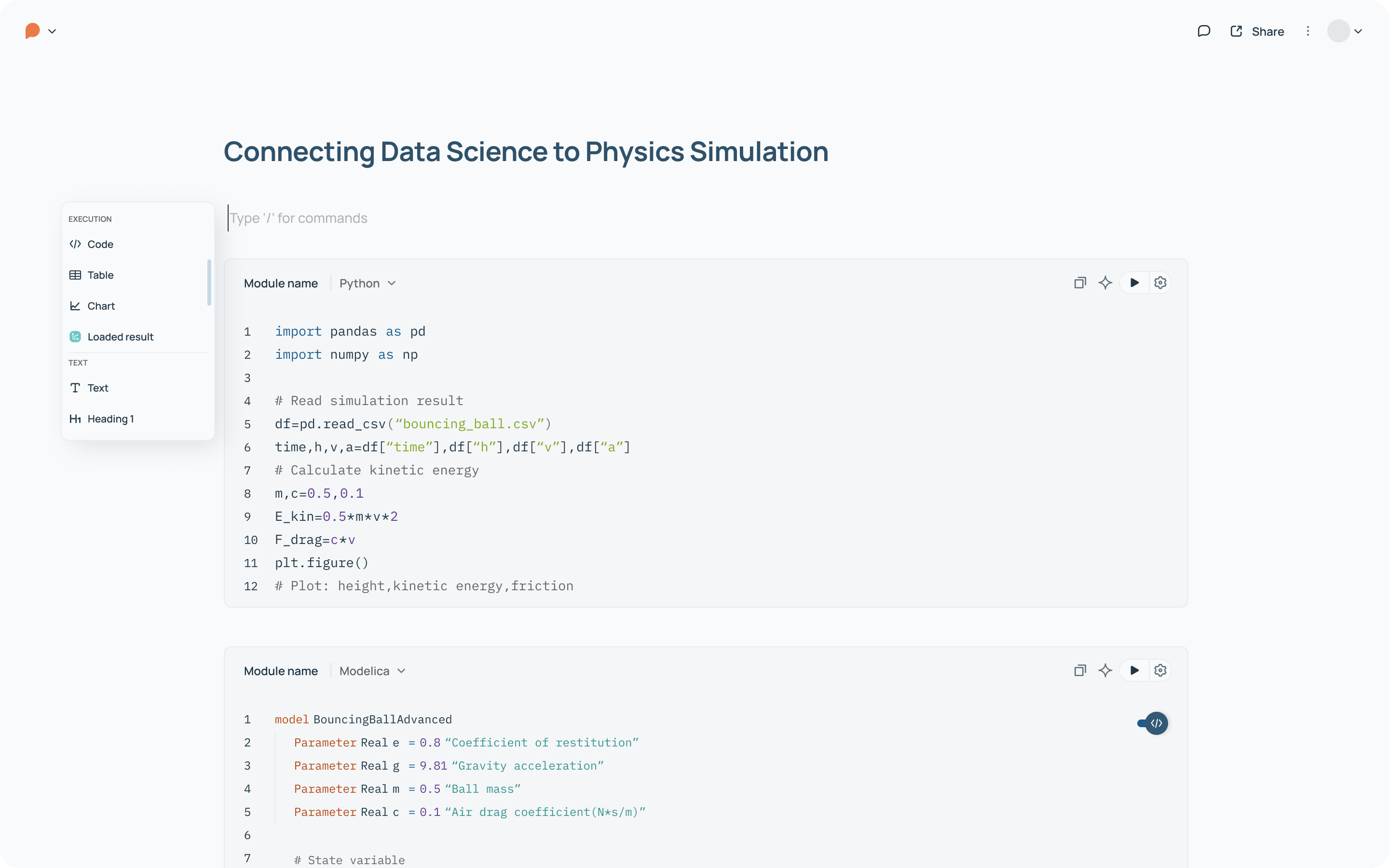
- Paper (Beta): Now in Beta, Paper integrates computational notebooks with a restructured Python pipeline, delivering reliable execution and automatic output updates for living technical documents.
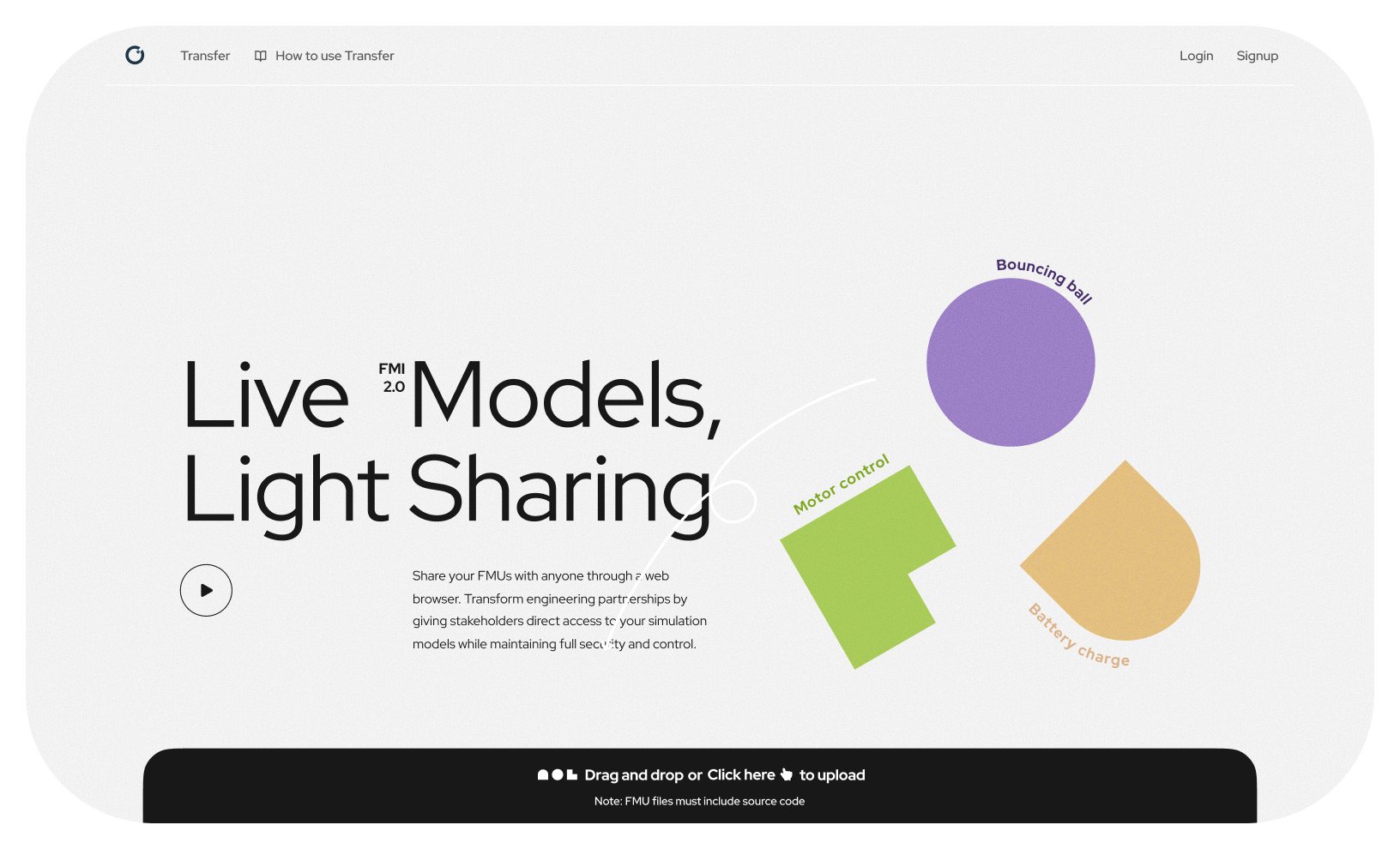
- Transfer (Model Collaboration): A new standalone platform for sharing FMU and SSP models. Users can generate links to transform simulations into interactive, browser-based experiences without requiring viewer installation or user sign-ups.
This article is provided by orthogonal supersystems GmbH
orchideo | easySSP v1.4.4 now available
orchideo | easySSP v1.4.4 released
The new easySSP version 1.4.4 introduces major new capabilities:
With the new Workflow Editor, you can now create and maintain workflows directly in easySSP, making it easier to turn modeling know-how into guided, repeatable steps. You can assemble and adjust workflow content (e.g., widgets) right where you work, configure it in the integrated editor, and use helpful inline hints to understand options at a glance. A built-in Preview Mode lets you instantly validate how the workflow will look and feel during execution.
You can now connect your preferred AI agent directly to easySSP (powered by the AI service of your choice) and use it as a smart co-pilot for your SSP projects based on the open MCP protocol. Instead of clicking through menus, you can describe what you want in natural language and let the assistant create or modify system structures, including components, connectors, and connections. It can also analyze your model and answer detailed questions about the structure and intent of your SSP project. Watch the AI explain it in this intro video.
In addition the release includes the following improvements and features:
- The automatic pre-simulation check now shows detailed information for all evaluated rules.
- The input and output connector visualization has been enhanced, making the data flow easier to understand at a glance.
- Workflows now support property data binding, so you can display and edit SSP model properties directly within a workflow.
- If you include images in Markdown in your process documentation or workflows, easySSP now automatically embeds them in the appropriate context.
- When saving default simulation settings, easySSP now includes additional options (e.g., output rate).
- The Workflow documentation can now be generated in a folder of your choice.
- When creating an SSP model, you can now select the SSP version directly.
- When copying parameters within a parameter set, you can now select all parameters or ranges.
- The Radar Chart workflow widget now supports custom labels for the displayed data.
easySSP is based entirely on open standards like SSP, FMI, and SSP Traceability. Learn more at easy-ssp.com.
This article is provided by Gregor Hermann, Peter Lobner eXXcellent solutions
XRG Simulation - Fall news
16th Int. Modelica & FMI Conference Review
We have enjoyed a great community event in the 16th International Modelica & FMI conference at Lucerne in September. Thank you for so many interesting discussions and shared ideas at our booth!
The conference started with a well-attended Workshop on SMArtInt+ (Link to Youtube video) to learn how to integrate and generate AI surrogates from within Dymola.
For the first time we saw a session solely dedicated to Modelica in “Maritime Applications”. Check our paper on “Modelica driven development of the thermal management control system for a zero-emission yacht”. It demonstrates how the exported FMU of the thermal energy system modelled with HVAC Library can be used to design the control logics outside of the Modelica tool (software in the loop simulation).
In our talk about “Status of the SMArtInt Library” (link to paper) we showcased a Modelica realization of the Balanced Neural ODE (BNODE) architecture applied to a ClaRa power plant example, demonstrating the potential of this generic AI-driven non-linear model reduction technique.
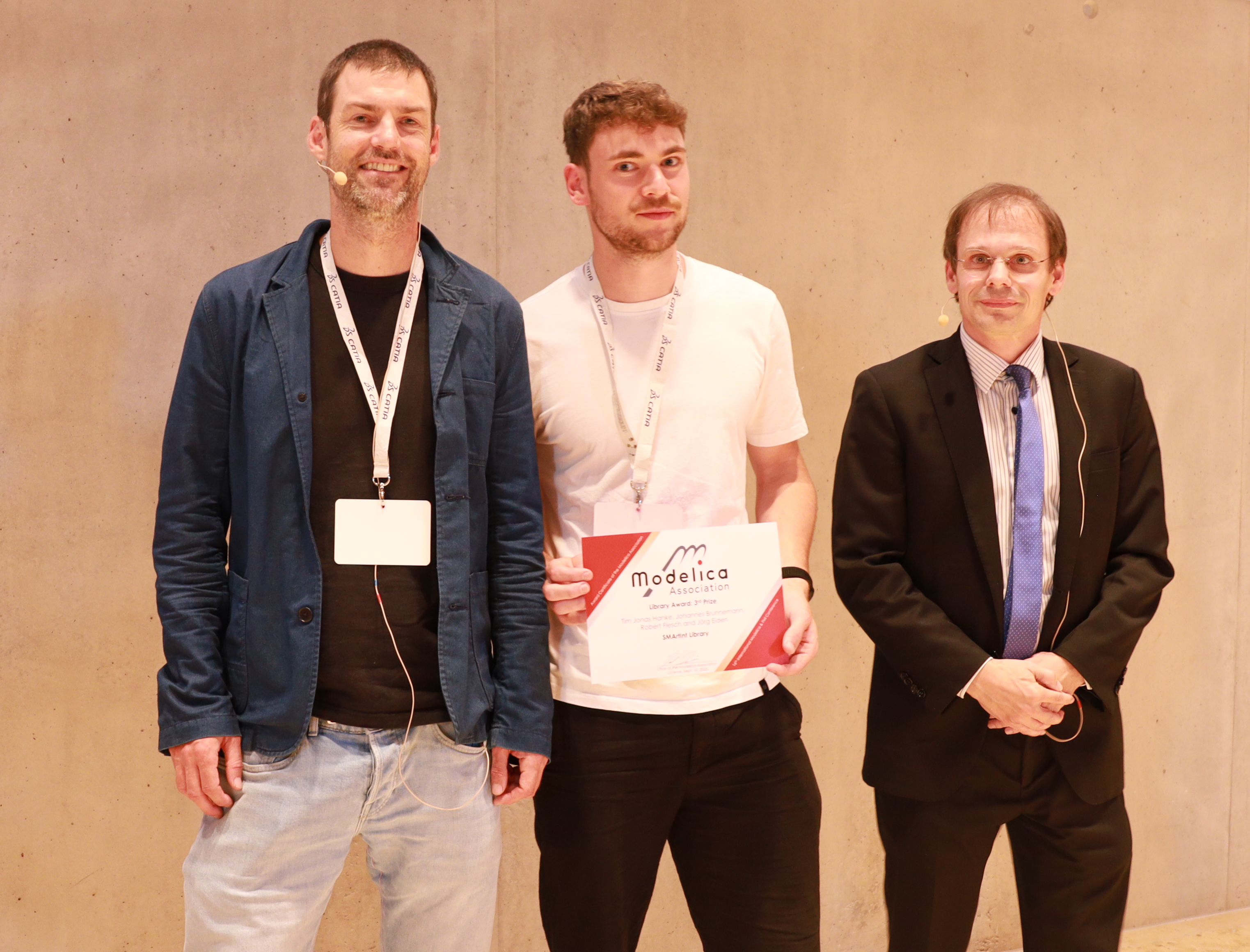
Finally, our open-source library SMArtInt received the Modelica Library Award (3rd prize) at Lucerne. This encourages us to continue our development towards an open interface for simple generation of Modelica hybrid models that combine the clarity of physics encoded in model equations with the accuracy of real data encoded in AI.
Modelica Library Announcements
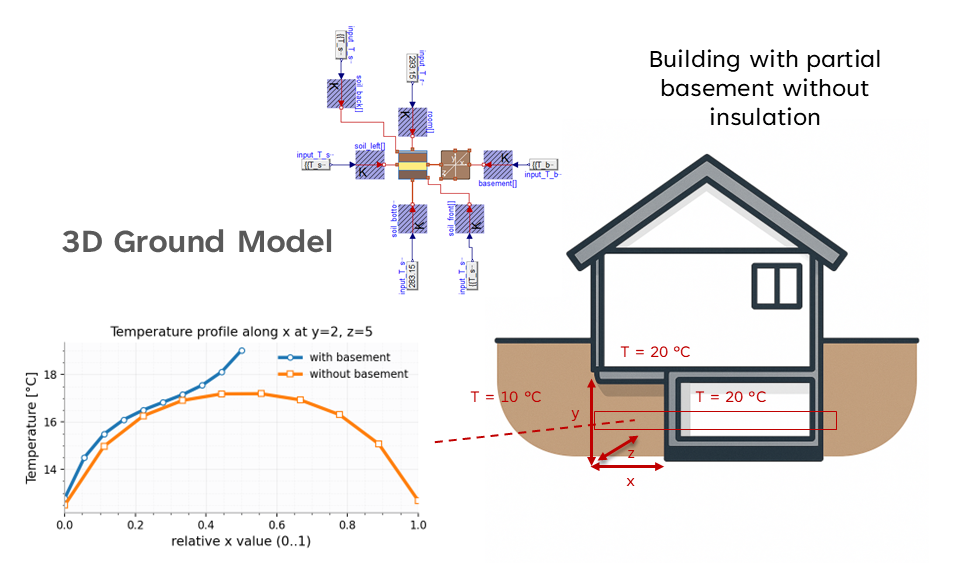
HumanComfort Library 2.20.0 provides a new 3D soil model for building simulations to represent realistic underground conditions with multiple soil layers. It is a helpful model for the simulation of a variety of foundation types, including semi-basements, making it suitable for more complex building foundation designs. The soil domain can be discretized to capture spatial temperature gradients with a suitable level of detail. Several common soil types are included with physical properties like heat capacity, thermal conductivity, and density, so you can start simulations quickly. Users can also add or adjust soil properties to match specific project requirements. This provides a reliable model for simulating soil-structure interactions in real-world building simulation projects.
HVAC Library 3.5.0 for HVAC system simulation introduces powerful new capabilities:
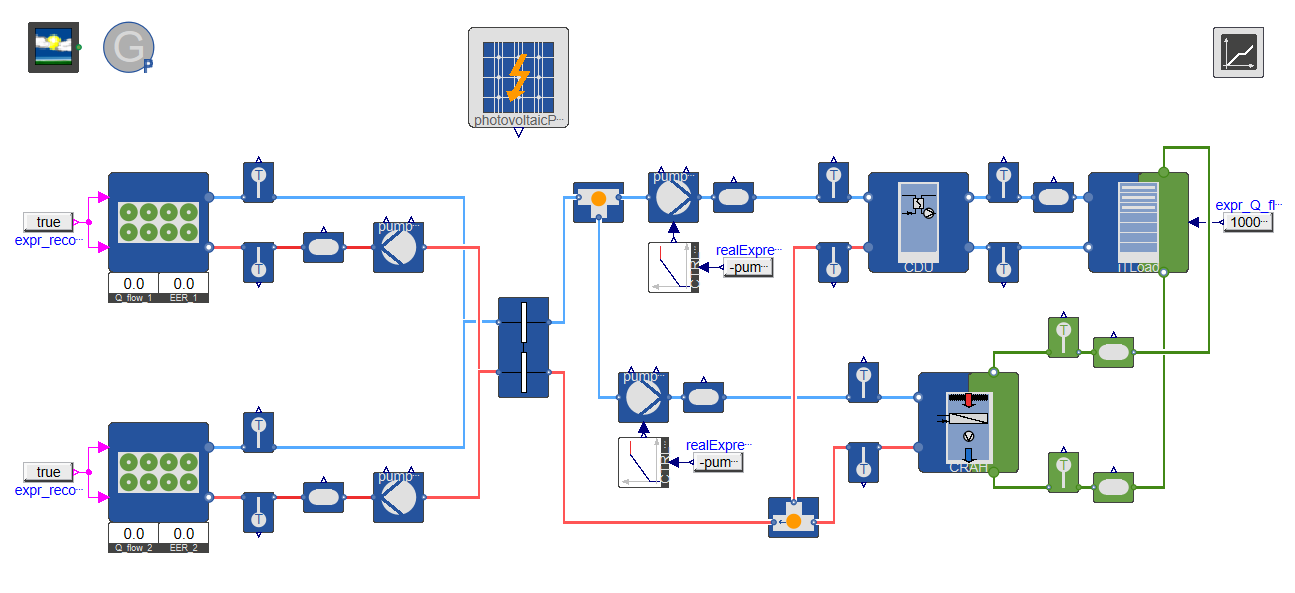
- A comprehensive Data Center Cooling Simulation Model and sub-modules has been added, showcasing an example of a full-year simulation under hot Abu Dhabi climate conditions. The climate conditions can easily be changed by using other Energy+ weather data files. The system features a three-stage cooling architecture with water- and air-cooled components, hybrid recoolers with free-cooling mode, CRAH/CDU branches, and chilled-water supply for a 1 MW IT load. The model is suited to perform energy performance studies and comparison of control strategies, evaluation of free-cooling potential, and location-based design optimization — offering a strong reference for real-world data center applications.
- A new stepwise controller model with timing and error-handling logic has been added which can be used to control heat pump models.
ClaRa+ Library 1.8.0 for energy system simulation introduces powerful new capabilities for modeling liquid systems:
-
This release adds a set of new liquid components, including pumps, heat exchangers, a balance tank, and junction and splitter models. These components extend the library’s capability to cover a wider range of liquid-based processes.
-
Liquid components now feature a scalar-quantity stream variable array, allowing users to transport arbitrary scalar quantities throughout a liquid network. Within liquid volume components, users can formulate custom source and sink equations for these scalar quantities. This makes it possible to model phenomena such as delayed neutron precursors, decay-heat precursors, corrosion products, fission products, or any other user-defined tracers with full flexibility.
Together, these enhancements broaden the scope of ClaRa+, enabling advanced liquid transient simulations for research and industrial applications.
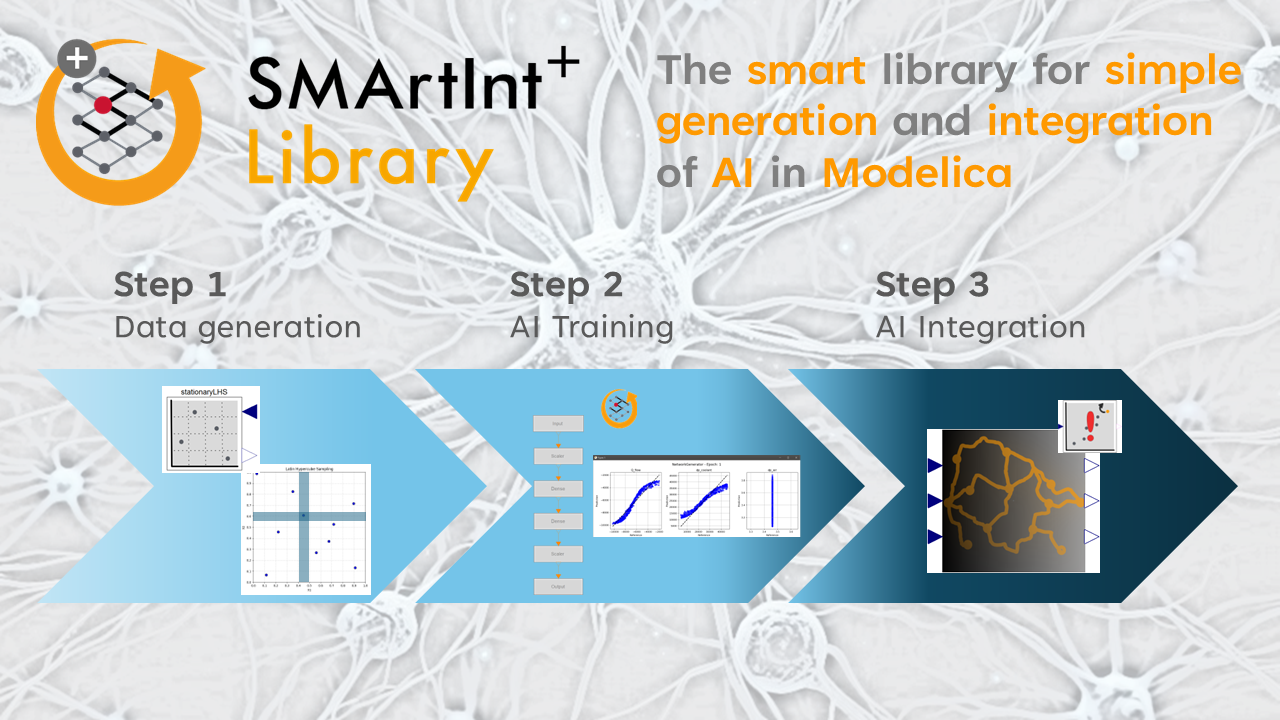
SMArtIntPlus 2.0.0 introduces two major new capabilities for integration and training of artificial intelligence in Modelica:
-
Data Generator: This new feature allows you to create training and validation datasets directly from Modelica models. Input values are efficiently sampled using Latin Hypercube Sampling (LHS), covering the desired parameter space. The generator can operate in different modes, supporting both steady-state and dynamic applications.
-
Network Generator: Define, train, and export neural networks directly within Modelica. The generator integrates a compiled Python backend with TensorFlow support, enabling the creation of custom network architectures and their export as TensorFlow or TensorFlow Lite models. It also supports Dimensionless AI via the Dedimensionalization-Layer. The Network Generator makes it easy to create hybrid models that combine Neural Networks with physical equations.
New partners
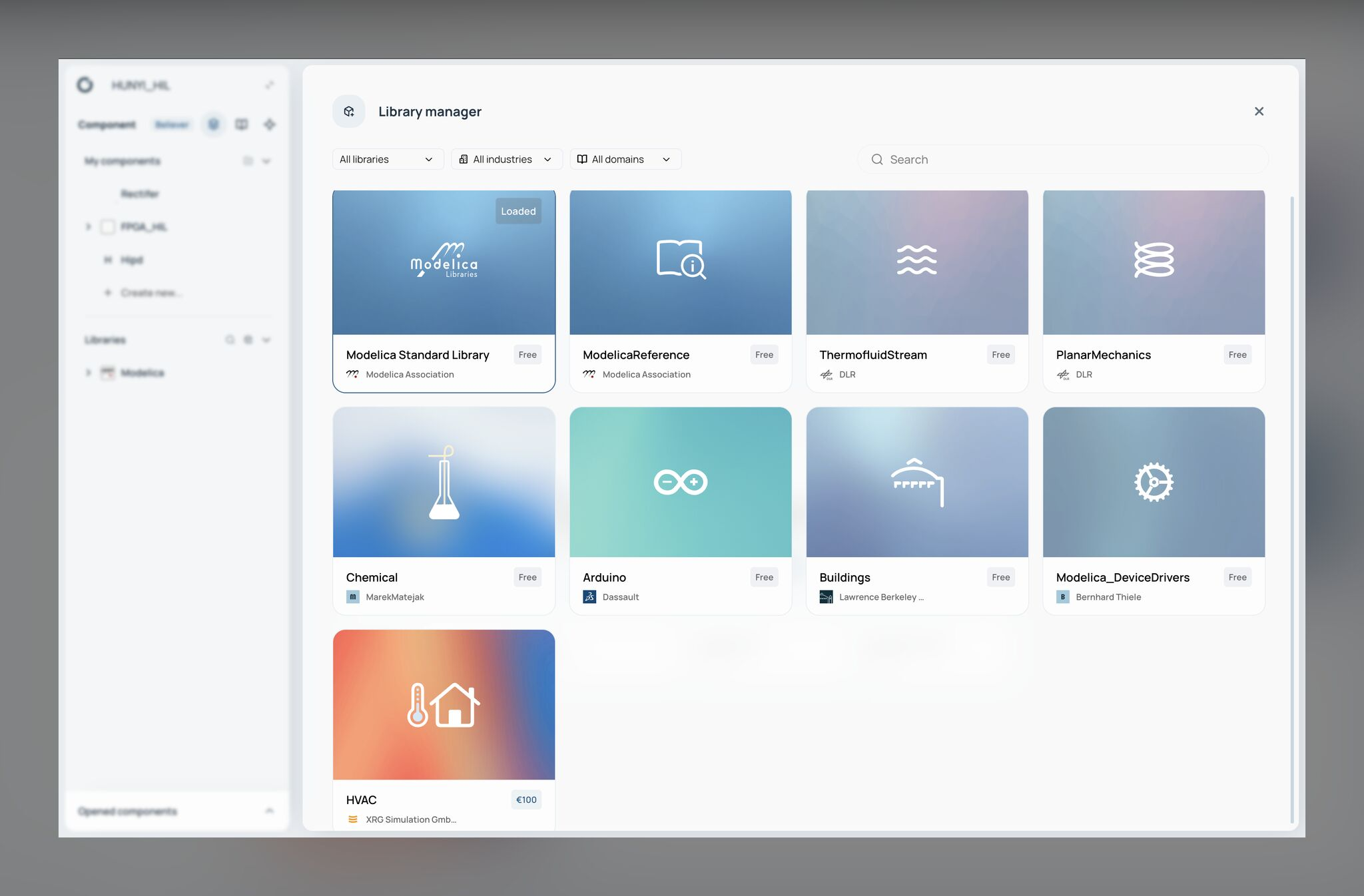
ODE Supersystems has integrated our HVAC Library into the Orthogonal Component App. It is available for simulation and modelling of HVAC systems in buildings. You can test 7 days for free!
Research
XRG has continued its commitment to sustainability and open-source software as an active member of the TransiEnt library consortium, reflected in the paper of the 16th Int. Modelica and FMI Conference.
Our development towards hybrid modelling continues in the ITEA4 research project OpenSCALING which we joint in April 2025. Stay tuned!
References
- Open-source SMArtInt version on SMArtInt Github “Official repository for SMArtInt Library”
- SMArtInt paper “Status of the SMArtInt Library”
- ICLR2025 conference contribution about BNODE generation and integration into Modelica
- TransiEnt paper “Status of the TransiEnt Library: Transient Simulation of Complex Integrated Energy Systems”
- Open-source ClaRa version on ClaRa Github “Official repository for ClaRa Library”
This article is provided by Stefan Wischhusen XRG Simulation GmbH
TLK-Thermo – Advent Calendar

Perfect companion for Modelica enthusiasts during the Christmas season: Starting December 1st, we open a virtual door of our TLK-Thermo Advent Calendar every day. Follow us on LinkedIn to learn tips & tricks about our Modelica related software and let yourself be inspired.
The following highlights are already waiting for you:
- Free Download of DaVE Lite - Our powerful visualization environment to present your simulation results.
- New TIL Tutorial – On how to adapt the behavior of the TIL Suite separator model in a refrigeration cycle. Further tips on TIL will follow. Interested in specific TIL tutorials? Send us your suggestions for future topics.
- New TIL Tool – TLK’s Data Map Creator to transform your known data points into a data map as a ready-to-use Modelica model.
- System simulation for everyone via a standardized, open tool chain of SSP, FMI and TLK Simulator.
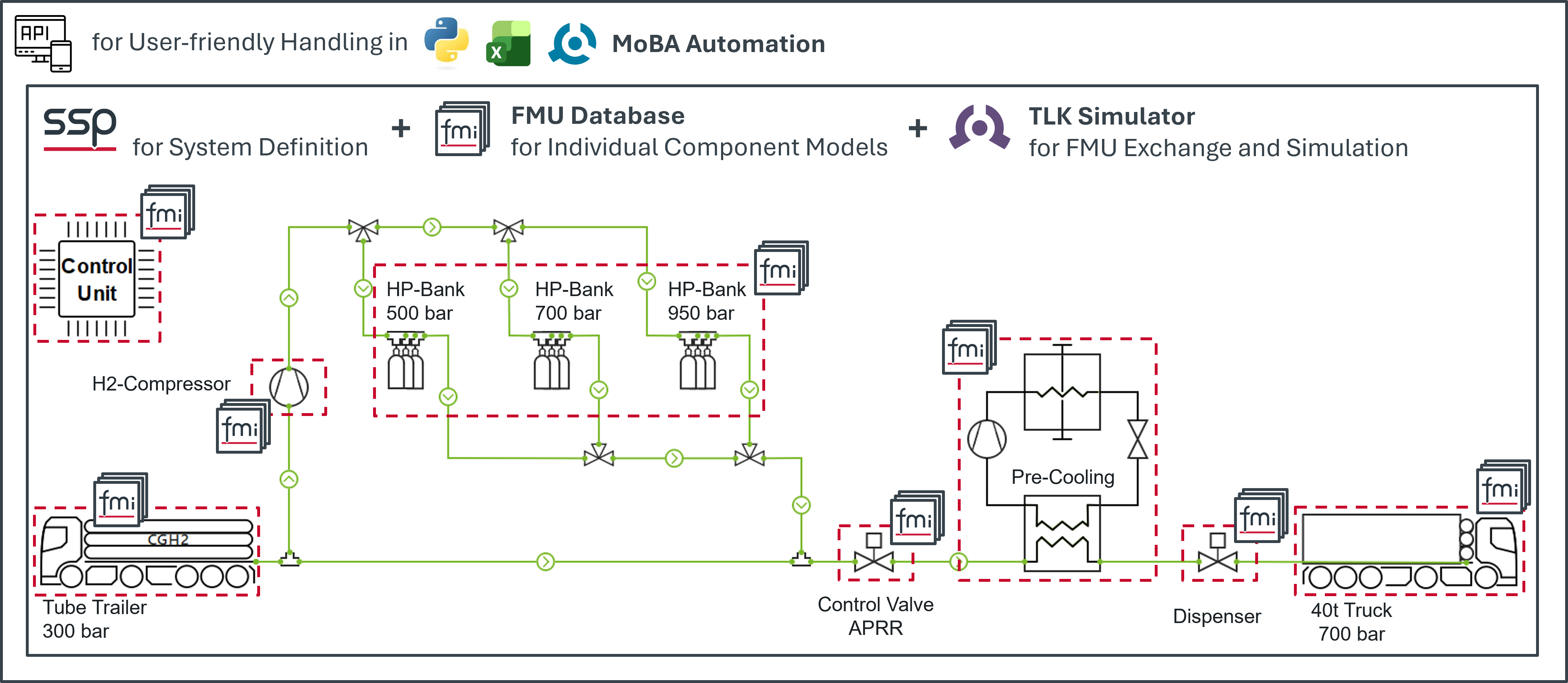
This article is provided by Lisa Busche (TLK-Thermo GmbH)
Siemens Digital Industries Software
Simcenter Amesim 2511 released
Siemens Digital Industries Software is pleased to announce the recent release of Simcenter Amesim 2511 as part of its system simulation solutions. This release introduces key updates including:
- A brand-new help browser with a more modern look and feel.
- A new licensing and deployment model, called Simcenter X Advanced that offers ease-of-use and flexibility based on a SaaS approach to licensing.
- An AI-enabled Chat, improving productivity across multi-language teams of Simcenter X Advanced users.
On the modeling side, users benefit from refined model libraries and additional components, which improve accuracy and flexibility when constructing engineering systems for automotive, aerospace, and energy applications.
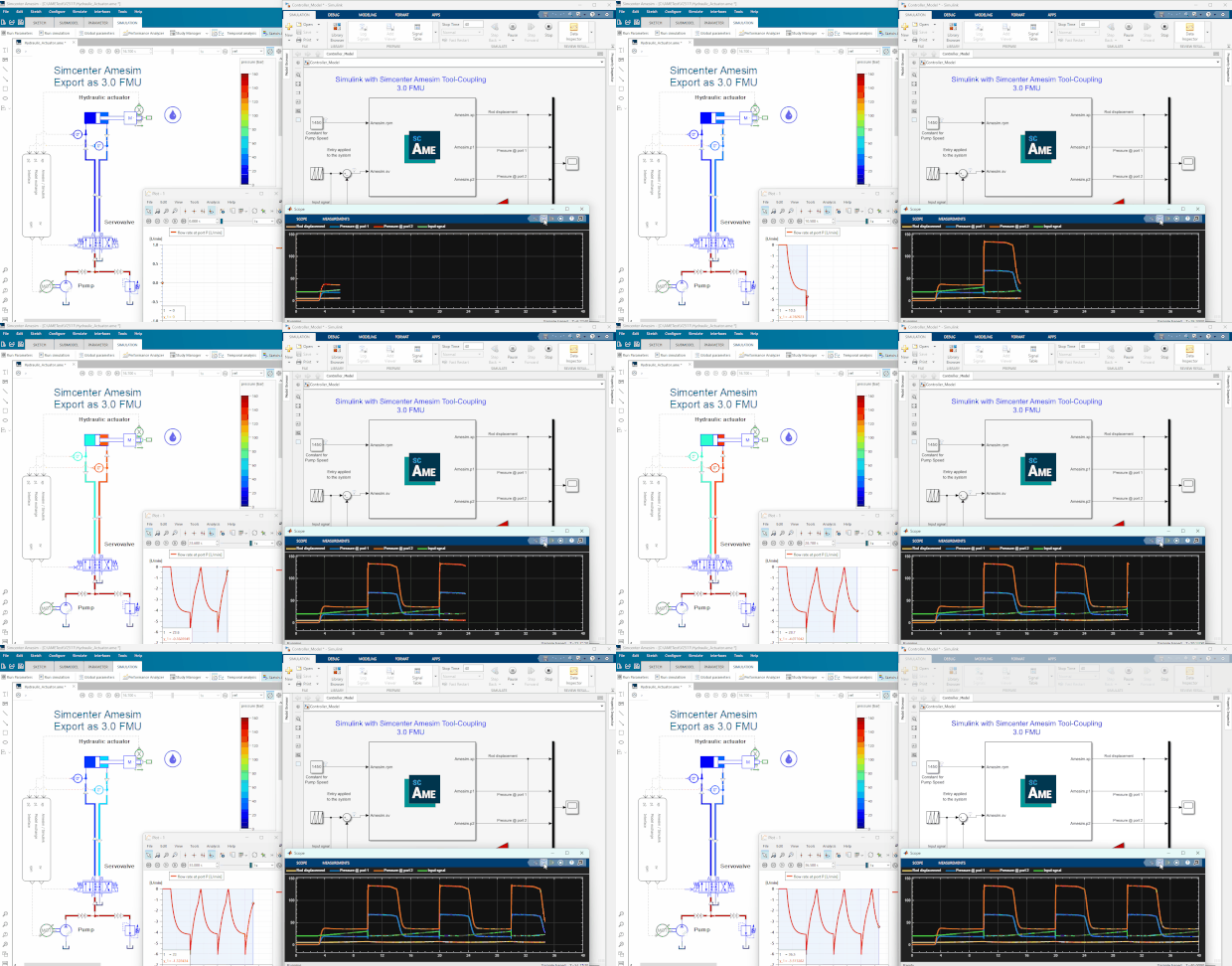
Interactive Tool-Coupling FMUs thanks to live and fully synchronized Sketch Animation
Before release 2511, Sketch Animation, one of the key strengths of Simcenter Amesim’s post-processing capabilities, could only be activated when Simcenter Amesim acted as the main model (FMU importing tool). This is still particularly useful during the Software-in-the-Loop (SiL) phase in which a controller model’s code can be imported to Simcenter Amesim. Now, even as of the Model-in-the-Loop (MiL) phase, this powerful capability can be used with a Tool-Coupling FMU exported from Simcenter Amesim and imported in the chosen — FMI compliant — Controls Design environment. The below example shows how to get live insight into the behavior of an exported plant model (3.0 FMU) during its coupling with Simulink used as external orchestrator. In this case, the Controls Designer gets an improved understanding of simulation results: he/she can directly observe how the controller model interacts with the Simcenter Amesim “plant model” via animations that are perfectly synchronized with the post-processing tools of both software, for maximum flexibility and convenience throughout the running co-simulation.
For more information on Simcenter Amesim, please visit our website.
This article is provided by Bruno Loyer (Siemens Digital Industries Software)
Dymola 2026x
 We are pleased to announce that Dymola 2026x has been released on Friday, 28 November 2025. Summary of key features:
Libraries
- Sustainable Supply Systems Library
- Modelica Standard library 4.1.0
Simulation
- Reduced size of Modelica FMU wrapper
- More efficient code generation for arrays
- Analytical adjoint derivatives for the ODE problem
Model development
- Text editor: select a variable and open its definition
See latest release for more details.
This article is provided by Dag Brück (Dassault Systèmes)
News from libraries
train_fmu_gym: Enabling FMU-based Deep Reinforcement Learning
The DLR Institute of Vehicle Concepts, Department of Vehicle System Dynamics and Control presents train_fmu_gym, a Python-based framework that utilizes the Functional Mock-up Interface (FMI) to leverage existing simulation models for deep reinforcement learning (DRL). The goal of train_fmu_gym is to enable users to easily set up and start DRL training, as well as evaluate trained agents based on system model FMUs, by providing a sophisticated command line interface (CLI). This allows existing Modelica and other FMI-based models to be reused directly for RL training without modifications to the underlying modeling workflow, bringing data-driven control methods closer to established engineering practice.
train_fmu_gym provides the following key features:
- Automated generation of DRL environments from FMI 2.0 and FMI 3.0 FMUs
- Flexible handling of different reward implementations and observation sets
- Definition, management, and use of simulation scenarios
- Integration of Modelica Credibility to define and handle uncertain scenarios
- Definition of evaluation metrics and execution of evaluation simulations to assess trained agents
- Support for setting up, training, and evaluating agents via more than 20 CLI functions
- Platform support for Linux and Windows
The toolchain is suitable for users who want a straightforward way to get started with RL on existing models, as well as for users who need deeper customization of environments, reward structures, and evaluation loops. It supports convenient iteration over environment versions and training configurations, enabling systematic experimentation until a satisfactory agent performance is achieved. The framework and example implementations are made openly available via the Helmholtz Cloud GitLab at: https://codebase.helmholtz.cloud/dlr-vsdc/train_fmu_gym
Further information about the framework is provided in the following contribution:
J. Ultsch, K. Ahmic, and J. Brembeck, “train_fmu_gym: A Functional Mock-up Unit-based Framework to Train Reinforcement Learning Agents for Multi-Physical Systems,” IEEE Access, 2025, DOI: 10.1109/ACCESS.2025.3636787
This article is provided by Johannes Ultsch Department of Vehicle System Dynamics and Control, Deutsches Zentrum für Luft- und Raumfahrt (DLR)
Sustainable Supply Systems Library
Sustainable Supply Systems Library released
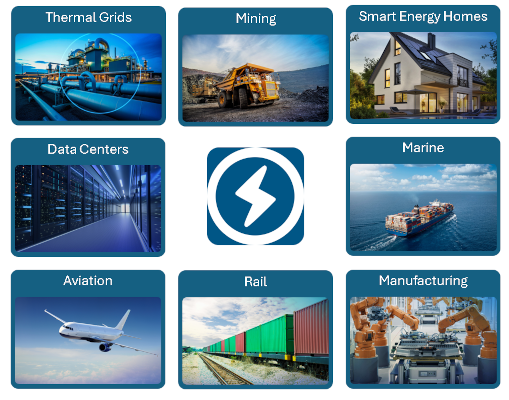
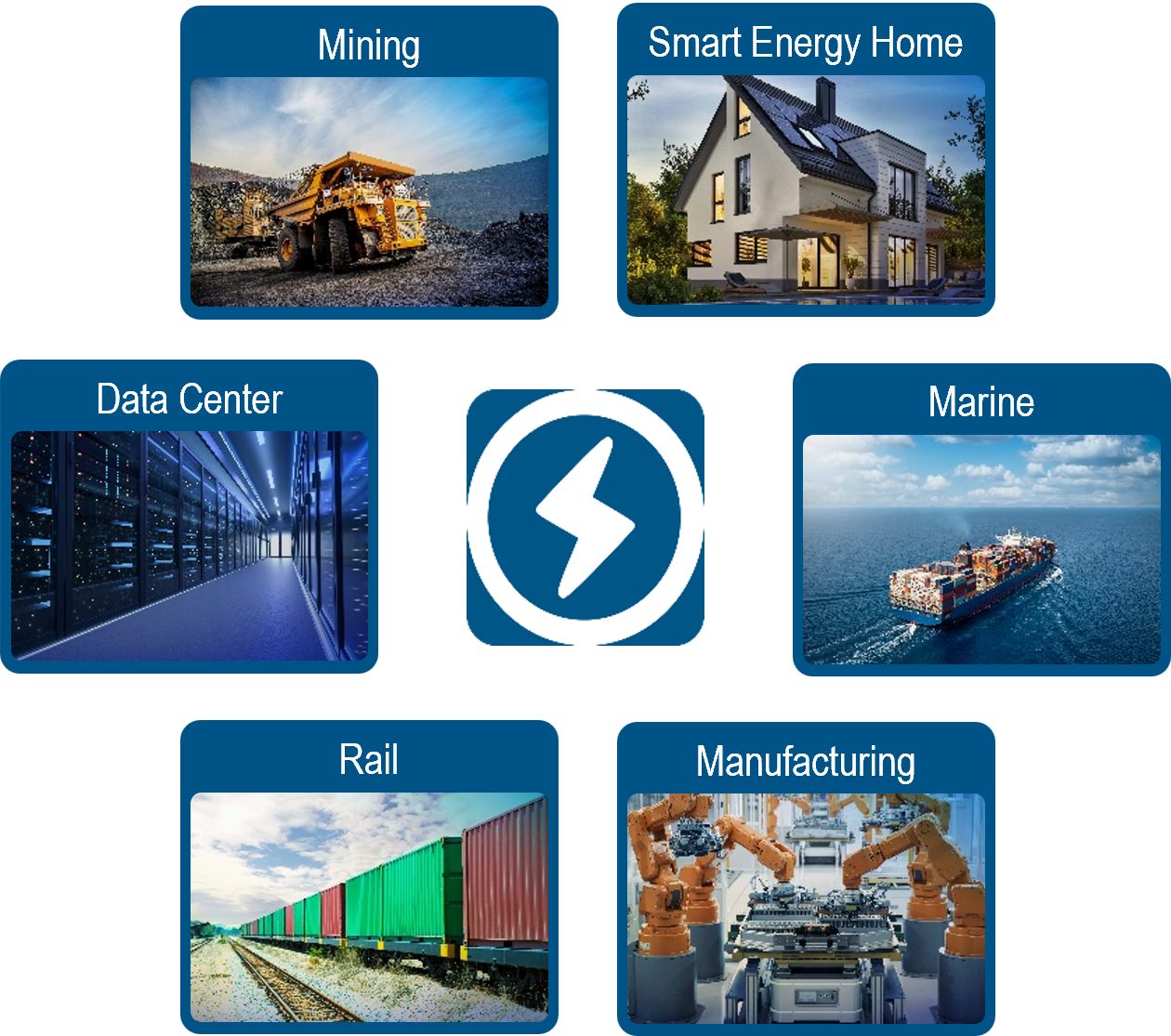
Dassault Systèmes is happy to announce the release of the Sustainable Supply Systems library (SuSy). The SuSy library has been developed for the evaluation and optimization of complex, interconnected energy supply systems across a wide range of industrial applications, including
- Battery and renewable energy integration in smart homes, district heating, industrial production facilities
- Alternative drive train technologies and fleet simulations in railway and mining heavy equipment operations
- Marine application with on-vessel energy management and multi-domain interaction of electrical, thermal and steam energy systems
- Aircraft mission design and emission tracking
- General production process simulation with simulated flow of bulk and general materials
SuSy focuses on robust, scalable and easy-to-parameterize models. The high level modeling approach enables simulations to be performed with limited available data during early design phases.
This article is provided by Philip Jordan (Dassault Systemes Deutschland GmbH)
Education news
Learn Modelica and FMI over your breaks
New initiative to teach progressively Modelica on LinkedIn
Since mid-September, Clément Coïc launched a LinkedIn newsletter: Learn Modelica & FMI.
The idea is simple: we all have busy lives, so if one wants to learn new skills, it should be through short, gradual, clear and regular notes or videos that can be consumed during a daily break - like when drinking your morning cup of tea 🫖 or coffee ☕️.
Since then, a dozen of articles have been published explaining Modeling and Simulation best practices, as well as Modelica and FMI concepts, such as causality and acausality.
Also available on its own website
The LinkedIn newsletter has now also its own website!
This makes it easier to find all the content that has been posted and allows for slightly better text formatting.
This website will also, in the near future, host the models developed for the newsletter.
Articles are still being posted on LinkedIn first, as it remains the best platform to spread the word and exchange ideas on the discussed topics.
Contributions are welcome!
Just reach out to me.
Clem
This article is provided by Dr. Clément Coïc